
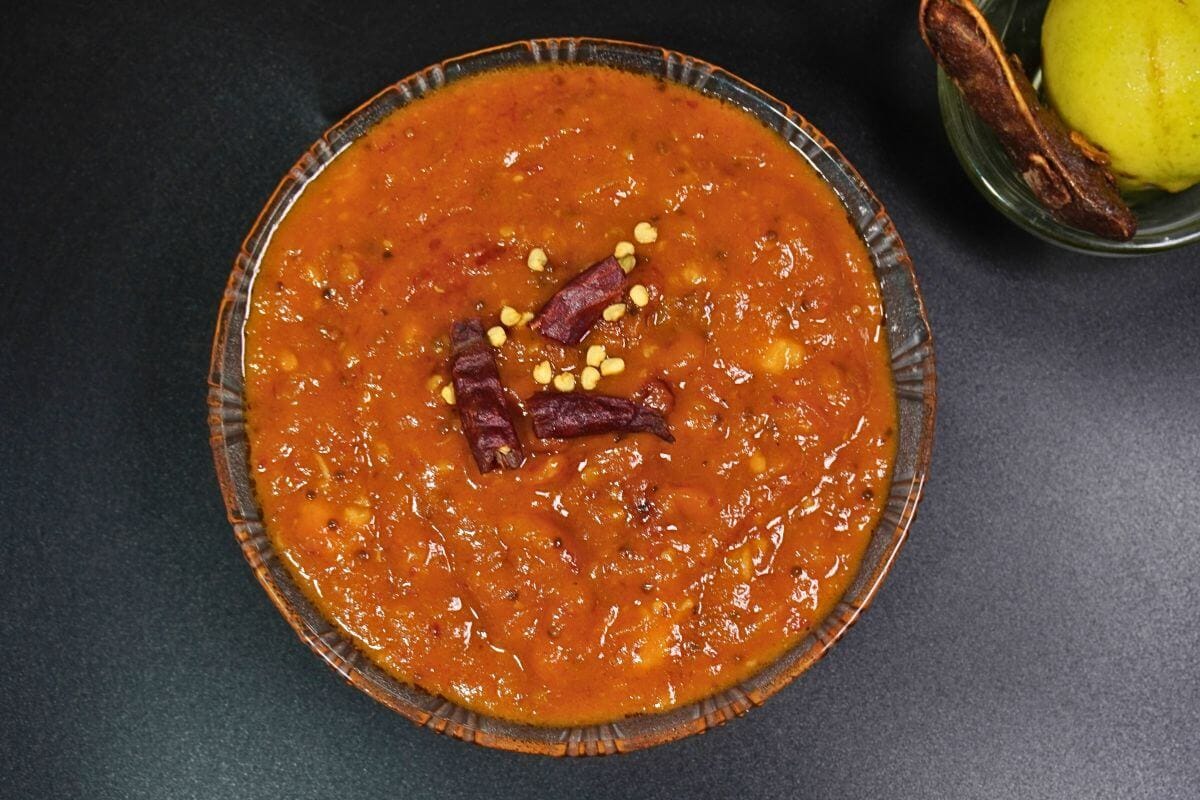
This Tamarind tomato chutney is a popular south indian side that perfect pair with any snack like samosa, pakora, tacos, and wraps. I make this recipe with just 5 simple steps with fresh tomatoes, tamarind few indian spices. It comes with sweet-and-tangy flavors that instantly lift any meal.
Love Indian chutney? try my Kadamba Fruit Chutney and this Amla Chutney or my Indian Cilantro Chutney.

What makes it especially appealing for your kitchens is its versatility. This endless pairing with main and side dishes.
Best of all, it is completely homemade, free from preservatives, naturally vegan, and incredibly easy to prepare with pantry-friendly ingredients.
What is Tamarind Tomato Chutney
Tamarind tomato chutney is a classic sweet and tangy chutney that combines the natural acidity of tomatoes with the deep sour notes of tamarind.
Traditionally used in Indian cooking as a side or dipping sauce, this chutney has evolved into a global favorite because of its bold flavor profile. The tomatoes provide body and mild sweetness, while tamarind adds a rich, slightly fruity sourness.
During ramada I make it ahead of time, preserve it, and this tamarind and tomato chutney is a part of my family’s daily Iftar.
Why You’ll Love Tamarind Tomato Chutney
- It has the perfect balance of sweet, tangy, and mildly spicy flavors that work with both Indian and Western foods
- This chutney is extremely versatile and pairs well with tacos, wraps, burgers, sandwiches, snacks, and grilled dishes
- Made with simple pantry ingredients, no special equipment or hard-to-find items required
- Completely vegan, dairy-free, and gluten-free, making it suitable for a wide range of diets
- Tastes even better as it rests, which makes it an excellent make-ahead condiment
- Much fresher and more flavorful than store-bought chutneys or sauces
- Easy to adjust for spice level and tanginess based on personal preference
Key Ingredients Notes
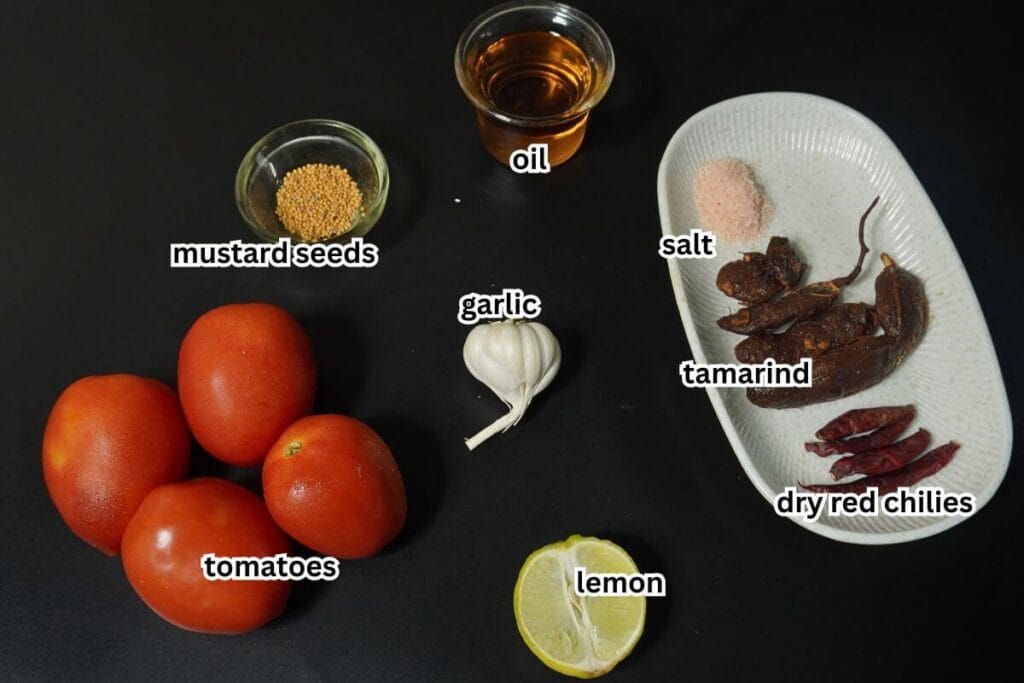
This tamarind tomato chutney comes with a few simple ingredients, but each one plays an important role in building its sweet, tangy, and savory flavor. When balanced correctly, these ingredients come together to create a rich.
- Tomatoes: Ripe tomatoes form the base of this chutney and provide natural sweetness and body.
- Tamarind: A small piece of tamarind adds the signature sweet and tangy flavor without overpowering the tomatoes.
- Garlic: Garlic enhances the overall depth and gives the chutney a mild savory kick. Don’t skip garlic it will boost flavour.
- Dry red chilies: Dry red chilies add warmth and gentle heat while keeping the flavor balanced.
- Mustard seeds: Mustard seeds are used for tempering and add a nutty aroma and authentic Indian flavor.
- Lemon juice: Fresh lemon juice brightens the chutney and enhances its tangy taste. Adjust as per your taste.
- Oil: I use mustard oil, which is perfect for this recipe, but you can swap it with olive oil.
- Salt: to taste.
How to Make Tamarind Tomato Chutney (Steps With Pictures)
Making tamarind tomato chutney at home is simple and mostly hands-off. The process involves gently cooking the base ingredients, blending them into a smooth paste, and finishing the chutney with a classic mustard seed tempering.
Step 1: Cook the Base Mixture
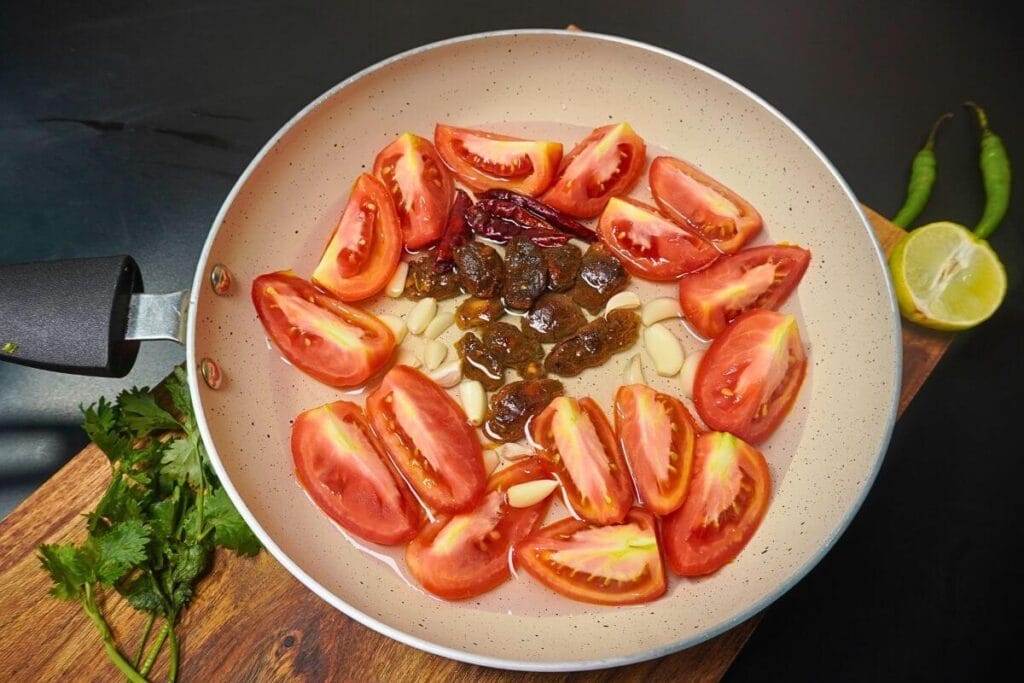
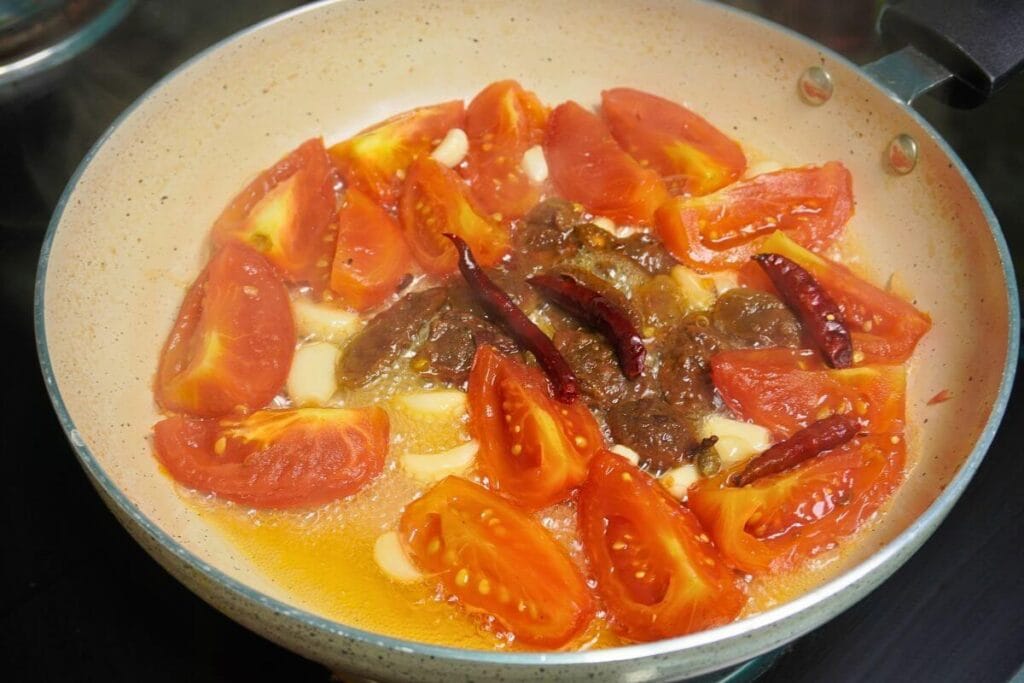
Add the sliced tomatoes, peeled garlic, tamarind, and dry red chilies to a frying pan. Pour in one cup of water, cover the pan, and cook on low heat for about 10 minutes. Cook until the tomatoes are completely soft and the skins begin to peel off. This slow cooking helps mellow the acidity and allows the tamarind flavor to infuse into the tomatoes.
Step 2: Blend Into a Smooth Paste
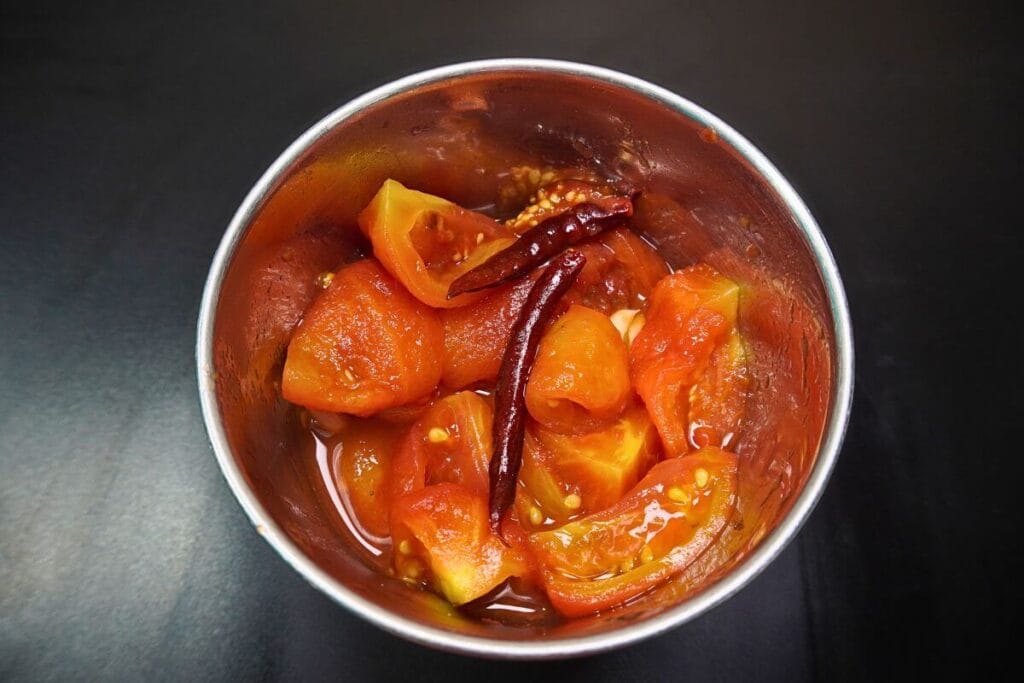
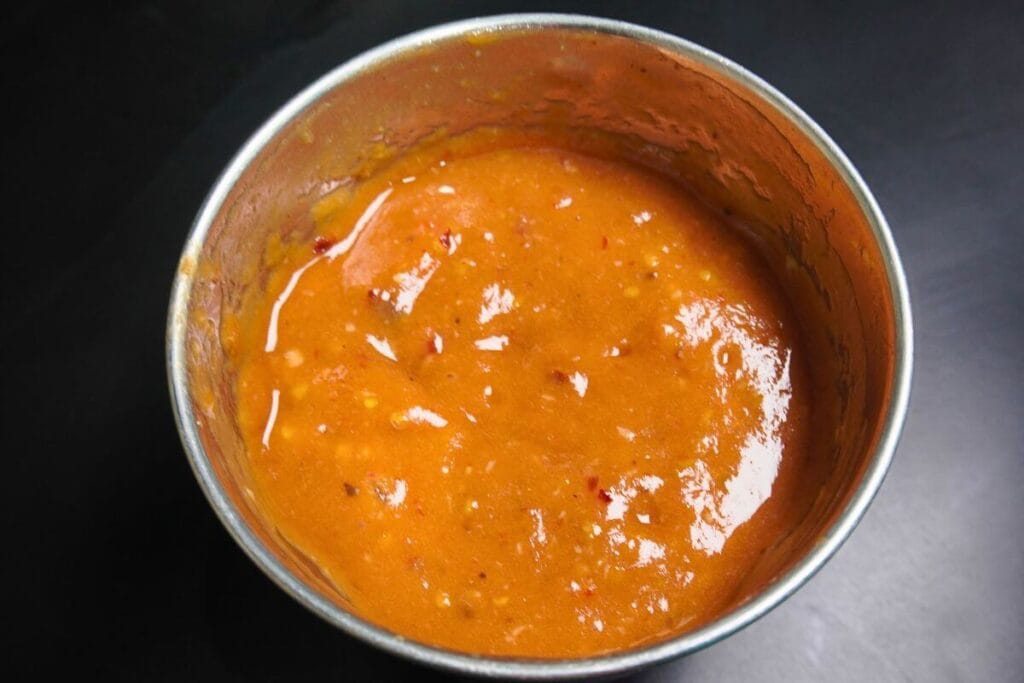
Turn off the heat and let the mixture cool completely. Remove the tomato skins carefully, then transfer everything to a blender. Grind into a smooth, thick paste. Removing the skins at this stage ensures the chutney has a smooth, velvety texture.
Step 3: Prepare the Tempering
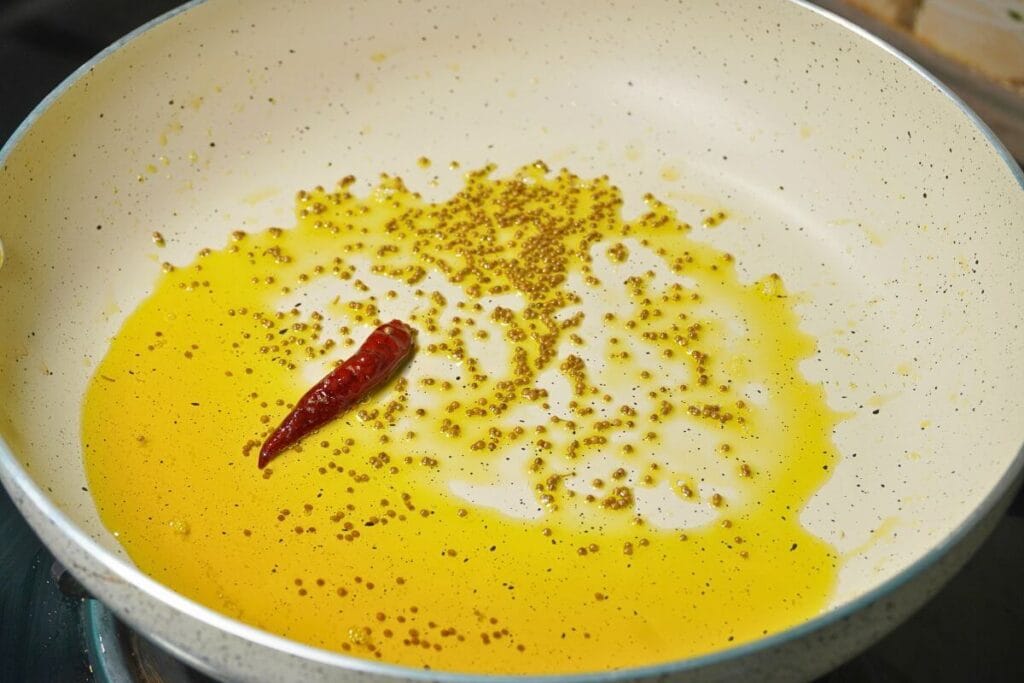
Heat the oil in a frying pan over medium heat. Add the mustard seeds and one whole dry red chili. Let the mustard seeds splutter fully. This step releases their aroma and forms the flavor base of the chutney.
Step 4: Cook the Chutney

Pour the blended mixture into the pan. Add salt to taste and cook on medium heat for about 5 minutes, stirring frequently. As the excess moisture evaporates, the chutney will thicken and become glossy and rich.
Step 5: Finish With Lemon Juice
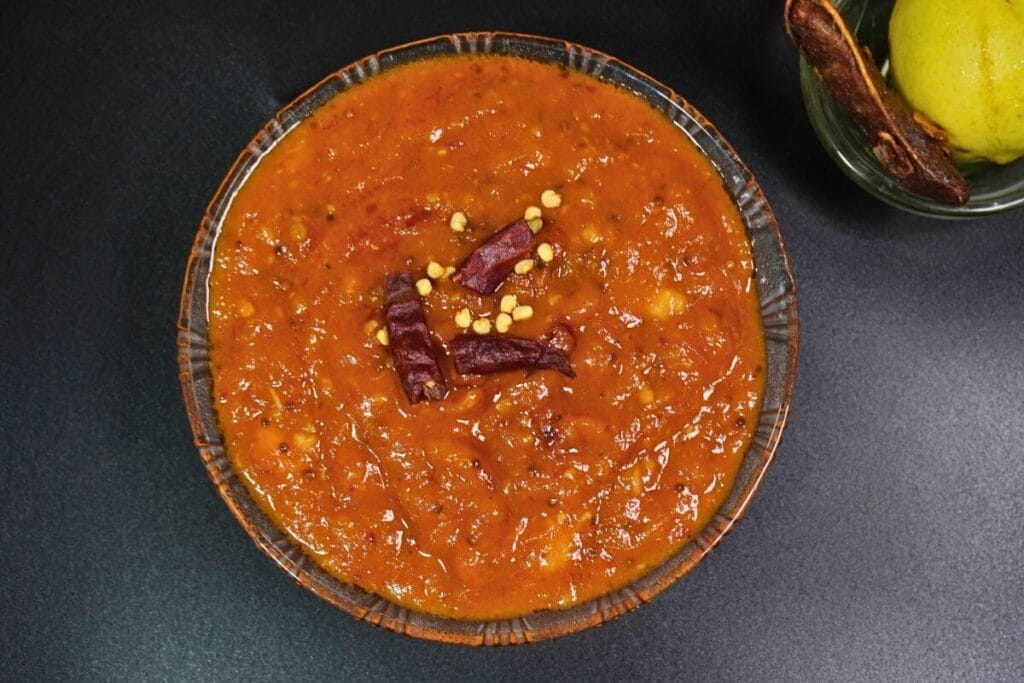
Once the chutney reaches a thick, spreadable consistency, turn off the heat. Add freshly squeezed lemon juice and mix well. This final step adds freshness and enhances the tangy flavor of the chutney.
Expert Tips
- Remove tomato skins after cooking, not before. The skins loosen easily once cooked and removing them ensures a smoother, restaurant-style texture.
- Do not rush the tempering step. Let the mustard seeds fully crackle in hot oil before adding the blended mixture, as undercooked mustard seeds can taste bitter.
- If the chutney tastes too sour, add a splash of water and cook for another minute. If it tastes flat, a few drops of lemon juice can instantly brighten it.
- For a deeper flavor, let the chutney rest for at least 30 minutes before serving. Like many Indian sauces, the taste improves as it cools and settles.
- This chutney thickens further as it cools, so avoid overcooking it on the stove.
Serving Suggestions
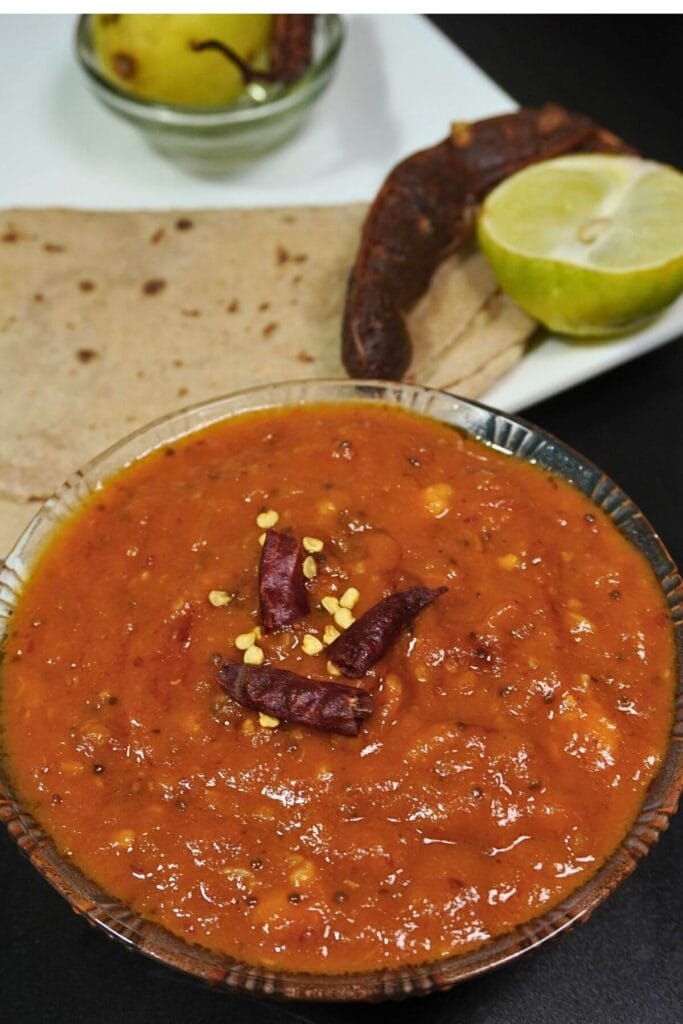
This tamarind tomato chutney is a true all-rounder and can instantly upgrade simple meals. Serve it as a dip with crispy snacks like fritters or vegetable pakoras for a sweet and tangy contrast. It also works beautifully as a spread in wraps, sandwiches, or burgers, if you like spiced fillings.
For quick lunches or dinners, this chutney over veg or fried rice to add a bold flavor twist. You can also serve it alongside dry sabzi dishes like aloo gobi or stir-fried vegetables to bring freshness to everyday meals. Keep it on hand as a ready condiment for snacks, tacos.
Make Ahead and Storage Suggestion
Tamarind tomato chutney is an excellent make-ahead condiment. You can prepare it up to three days in advance and store it in an airtight container in the refrigerator. The flavors deepen over time, making it even more delicious the next day.
I usually make ahead during Ramadan because my kitchen is so busy to prepare varities of Iftar.
For longer storage, transfer the cooled chutney into a clean glass jar and keep it refrigerated for up to one week. Always use a dry spoon to avoid introducing moisture.
This chutney also freezes well in small portions, making it convenient for quick meals, snacks, or last-minute entertaining.
More Deep Sauce & Chutney Recipes
- Tomato Mashed Chutney
- Chicken Liver Fritters Recipe
- Crispy Green Banana Fritters
- Boiled Egg Fritters For Tea Time Snacks
Tamarind Tomato Chutney
Ingredients
- 4 tomatoes (sliced)
- 1 garlic clove (peeled)
- 1 tablespoon mustard seeds
- 4 dry red chilies
- small piece of tamarind
- ½ lemon (for juice)
- salt to taste
- 3 tablespoon oil
Instructions
Step 1: Cook the Base Mixture
- Add the sliced tomatoes, peeled garlic, tamarind, and dry red chilies to a frying pan. Pour in one cup of water, cover the pan, and cook on medium heat for about 5 minutes. Cook until the tomatoes are completely soft and the skins begin to peel off. This slow cooking helps mellow the acidity and allows the tamarind flavor to infuse into the tomatoes.
Step 2: Blend Into a Smooth Paste
- Turn off the heat and let the mixture cool completely. Remove the tomato skins carefully, then transfer everything to a blender. Grind into a smooth, thick paste. Removing the skins at this stage ensures the chutney has a smooth, velvety texture.
Step 3: Prepare the Tempering
- Heat the oil in a frying pan over medium heat. Add the mustard seeds and one whole dry red chili. Let the mustard seeds splutter fully. This step releases their aroma and forms the flavor base of the chutney.
Step 4: Cook the Chutney
- Pour the blended mixture into the pan. Add salt to taste and cook on medium heat for about 5 minutes, stirring frequently. As the excess moisture evaporates, the chutney will thicken and become glossy and rich.
Step 5: Finish With Lemon Juice
- Once the chutney reaches a thick, spreadable consistency, turn off the heat. Add freshly squeezed lemon juice and mix well. This final step adds freshness and enhances the tangy flavor of the chutney.
Notes
- Use ripe tomatoes for best flavor and natural sweetness.
- Remove tomato skins after cooking for a smoother chutney texture.
- Adjust tamarind quantity based on how tangy you like the chutney..
