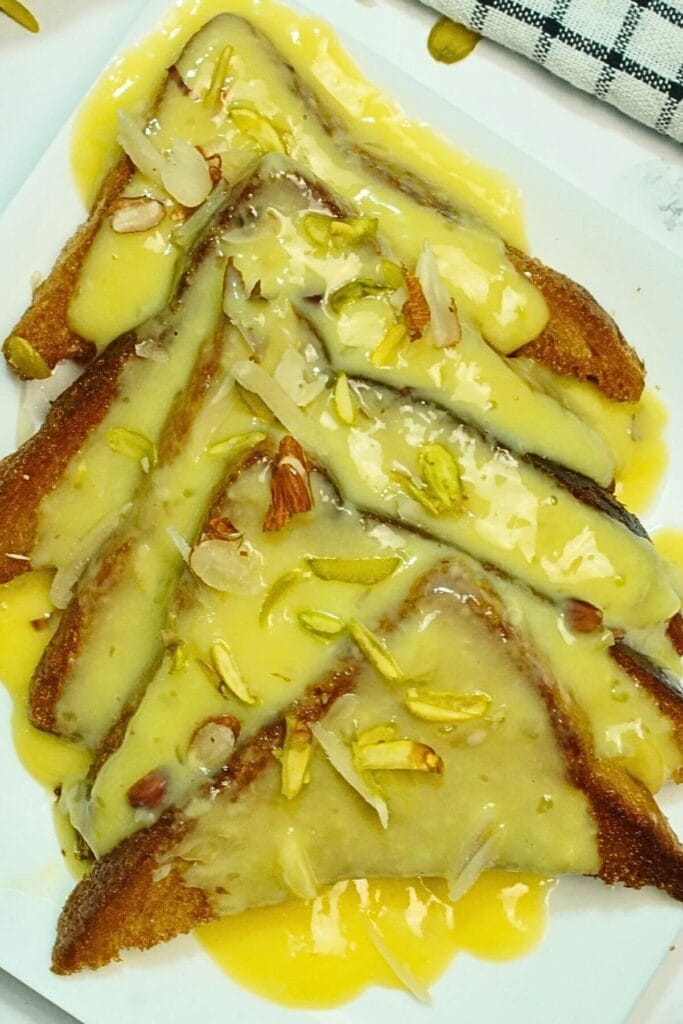
This homemade shahi tukda toast recipe gives you a rich, creamy Indian dessert without any complicated steps. Fried bread triangles topped with a thick, sweetened milk I call it rabri and chopped dry fruits. It is a classic Mughlai sweet that you can make at home in about 30 minutes.
You can also try my Shahi Tukda Recipe Without Milk.
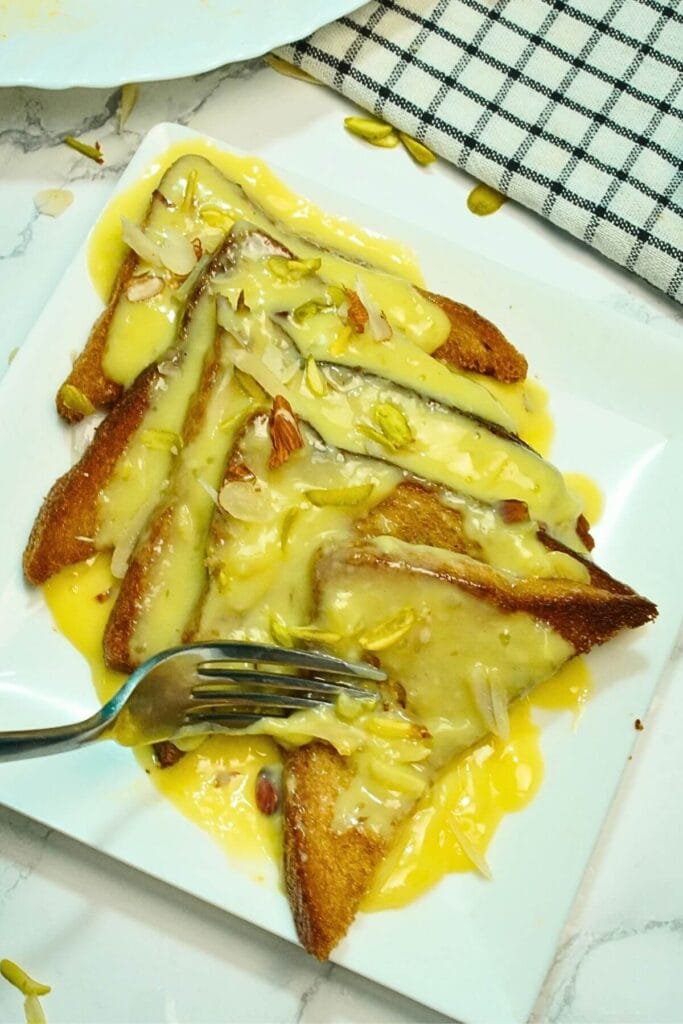
About Shahi Tukda Toast
Shahi tukda is a well-known Indian dessert with roots in Mughlai cooking. “Shahi” means royal, and the name fits. It is made with fried bread soaked or topped with rabri, a thick, reduced, sweetened milk.
The dessert has been made in Indian homes for generations and is a popular choice for festivals, Eid, and special occasions.
This version uses full-cream milk cooked down with milk powder to make a quick, thick rabri.
The milk powder helps the milk reduce faster and gives the topping a rich, creamy body. The fried bread soaks up the rabri and becomes soft and filling. It is a simple recipe with a small list of ingredients, but the result feels like proper celebratory food.
Why You’ll Love This Recipe
- Quick homemade rabri. Milk powder helps the milk thicken faster, so you skip the long wait of the traditional method.
- Rich and satisfying. The creamy topping over fried bread makes this a filling dessert that goes a long way.
- Only a handful of ingredients. Full-cream milk, bread, sugar, dry fruits. Nothing hard to find.
- Serve it warm or cold. Both ways taste great, so you can make it ahead and serve it chilled if you like.
- A proper festive dessert. This looks beautiful on a plate and is a great choice for Eid, Diwali, or any special meal.
Ingredient Notes
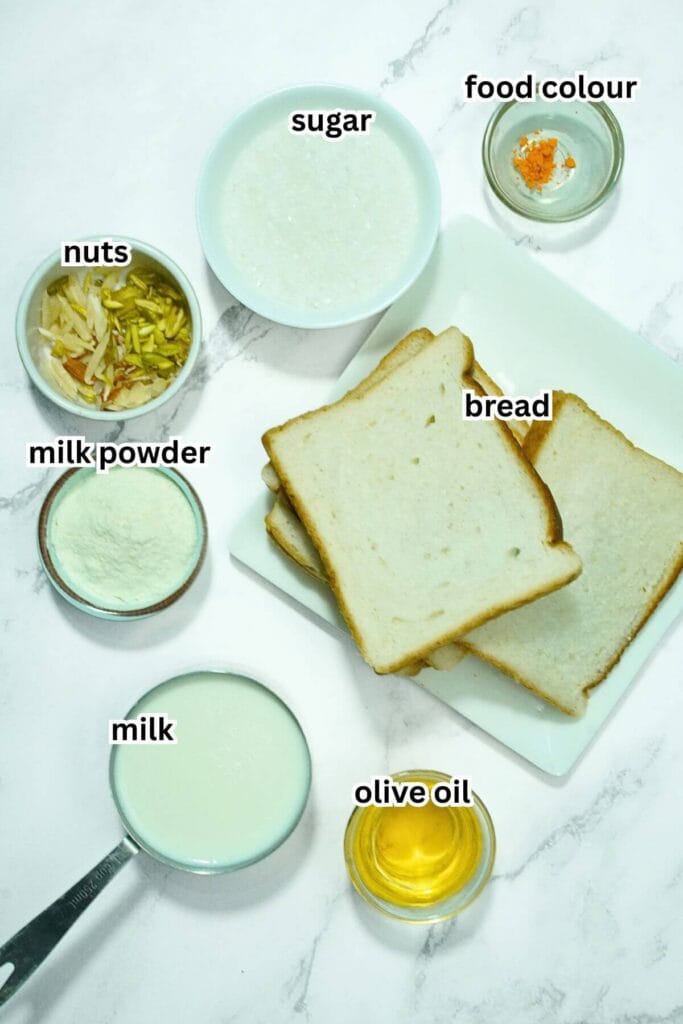
- Bread slices – Plain white sandwich bread works best. It fries evenly and soaks up the rabri well. Do not use whole wheat or multigrain bread for this recipe.
- Full-cream milk – Use whole full-fat milk. It gives the rabri its richness. Low-fat milk will not reduce as well.
- Milk powder – This speeds up the thickening. Two tablespoons is enough. Do not skip it as it makes a real difference to the final texture.
- Sugar – Half a cup (100 grams) sweetens the rabri well. Taste and adjust once it is ready if you want it a little sweeter.
- Food colour – Just one pinch. It gives the rabri a soft, pretty color. You can skip it and use a small pinch of saffron soaked in a teaspoon of warm milk instead.
- Oil – Any neutral oil for deep frying. Sunflower or vegetable oil both work.
- Mixed dry fruits – Finely chopped cashews, almonds, and pistachios are classic. Chop them small so they spread nicely over the top.
How to Make Homemade Shahi Tukda Toast
1. Pour 500 ml (about 2 cups) of full-cream milk into a heavy-bottomed pan. Warm it on medium heat until it is just hot. Do not let it boil at this stage.
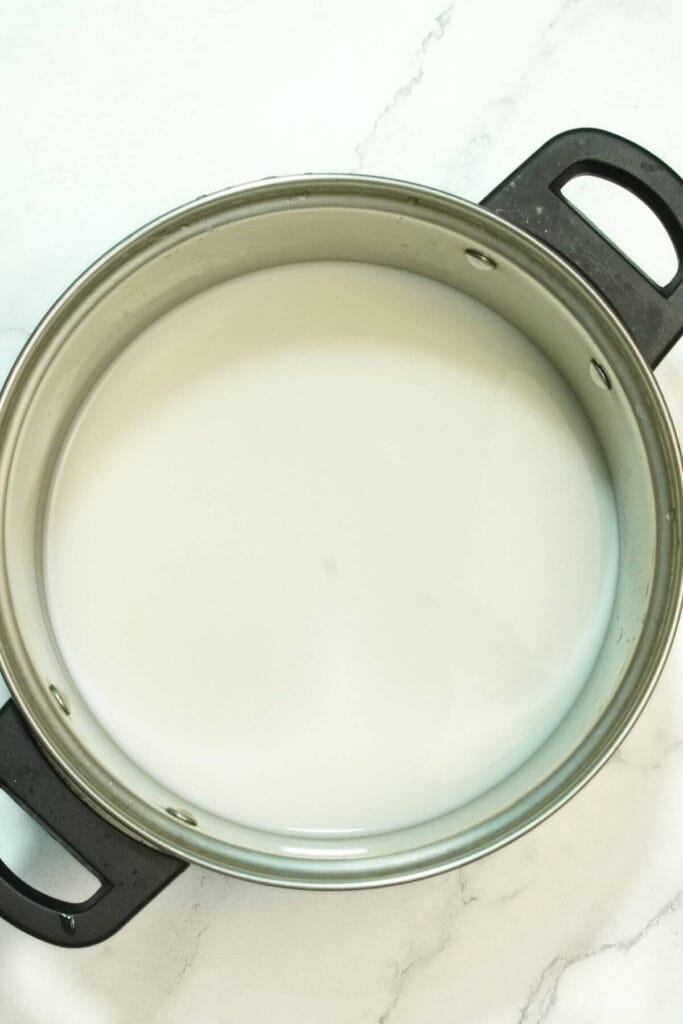
2. Add 2 tablespoons of milk powder to the warm milk. Whisk it in straight away until fully dissolved with no lumps. Turn the heat up to medium-high. Stir the milk continuously as it cooks. Do not step away. Scrape the sides and bottom of the pan regularly so the milk does not stick or scorch.
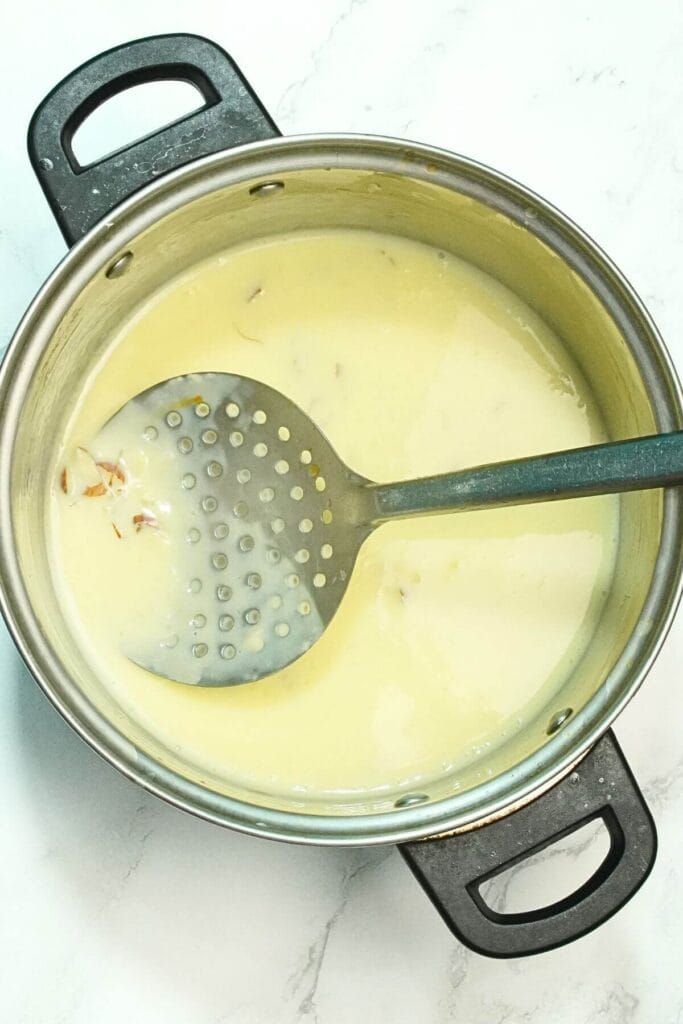
3. Keep cooking and stirring until the milk has reduced to about one-fifth of what you started with and looks thick and creamy. This takes around 15 to 18 minutes. The rabri is ready when it coats the back of a spoon and holds its shape for a moment before dripping off.
4. Add ½ cup (100 grams) of sugar and one pinch of food colour and some chopped dry fruits. Stir well until the sugar dissolves fully. Cook for 2 to 3 more minutes, then take the pan off the heat. Set the rabri aside.
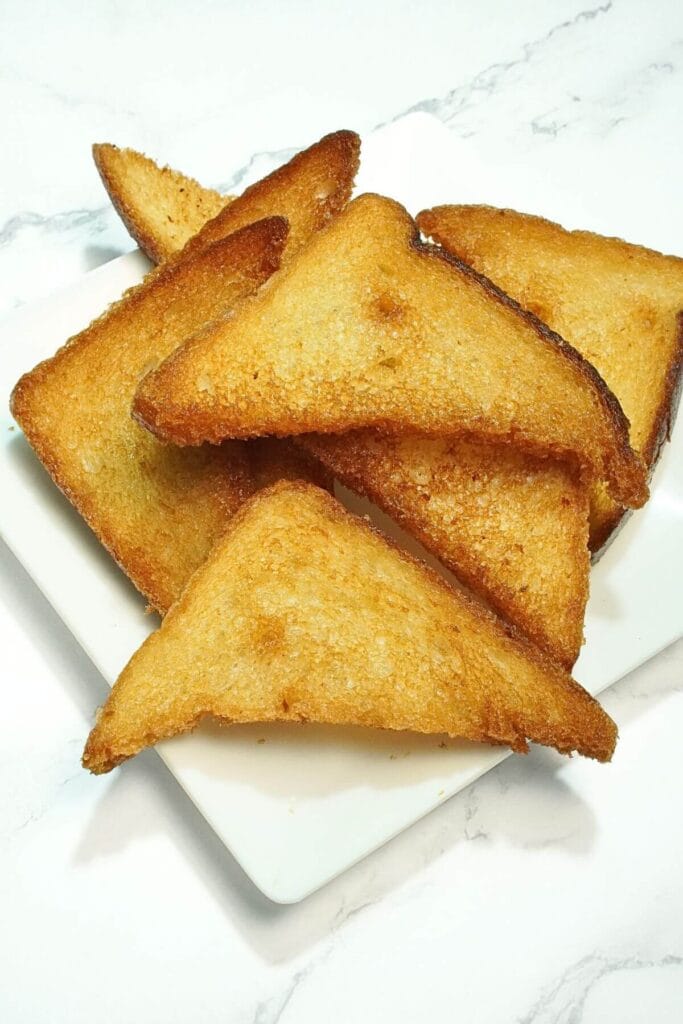
5. Heat oil in a deep frying pan on medium heat. Once the oil is hot, carefully add the bread triangles a few at a time. Fry on medium heat, turning once, until both sides are golden. This takes about 2 to 3 minutes per side. Lift them out and drain on a paper towel.
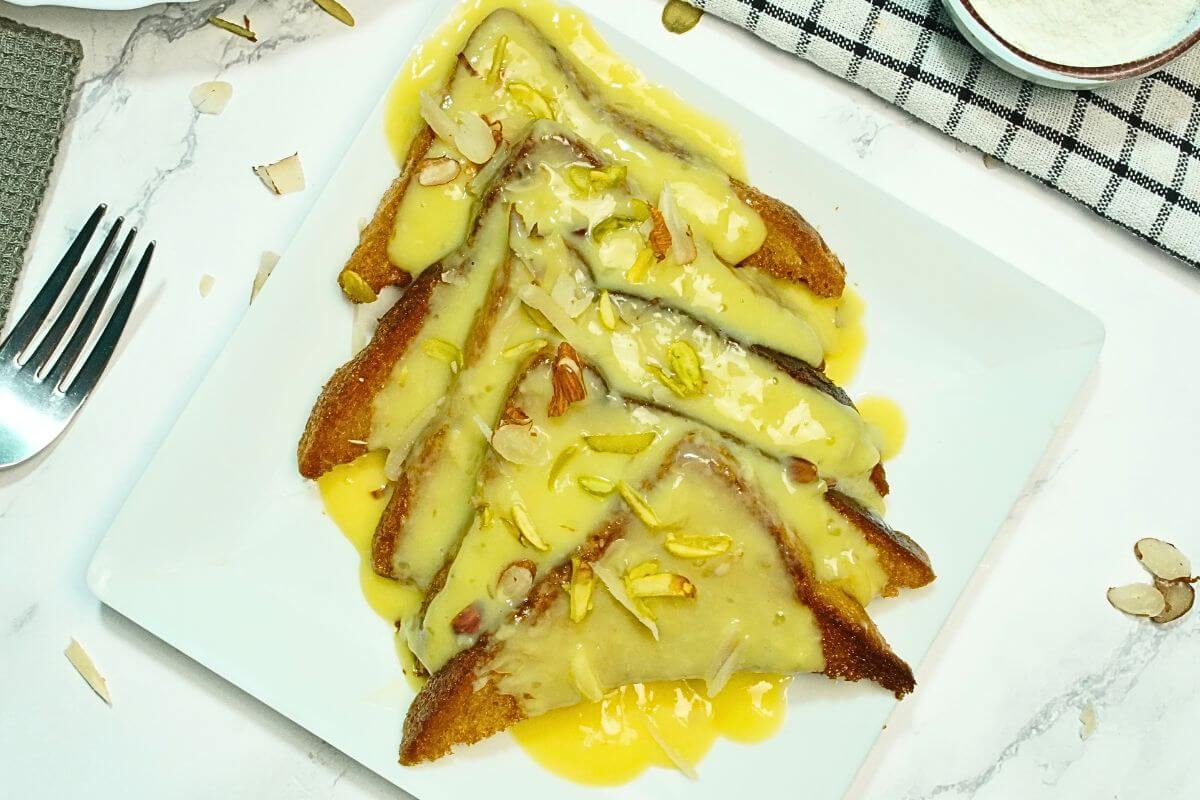
6. Arrange the fried bread triangles on a serving plate in a single layer. Pour the warm rabri generously over the bread so every piece is covered. Top with a good amount of finely chopped mixed dry fruits.
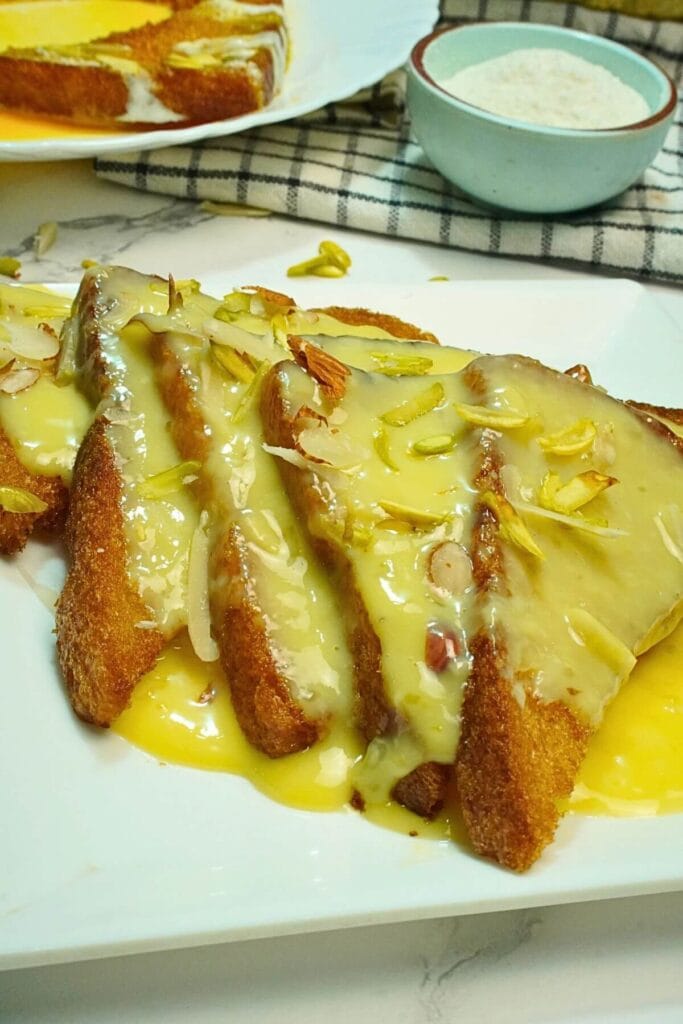
7. Serve warm right away,or let it cool and refrigerate for 30 minutes to 1 hour before serving chilled.
Expert Tips
- Keep stirring the milk the whole time it cooks. If you stop, it will stick to the bottom of the pan and burn. Use a heavy-bottomed pan to lower this risk.
- Do not make the rabri too thick. It should pour easily. If it gets too thick before you are done cooking, add a small splash of warm milk and stir it in.
- Fry the bread on medium heat, not high. If the oil is too hot, the bread colors too fast and stays soft in the center. Medium heat gives you a more even result.
- Pour the rabri over the bread just before serving. If the bread sits in the rabri too long before you eat it, it turns very soft. Some people like it that way, but if you want a little more texture, pour and serve right away.
How to Serve
Shahi tukda toast tastes great both warm and cold. Serve it warm straight off the stove for a richer, heavier dessert. Or let it cool, cover the plate, and chill it in the fridge for 30 minutes to 1 hour.
The cold version is firmer and the rabri sets slightly, which many people prefer. Either way, garnish with the dry fruits just before serving so they stay fresh.
We serve Shahi tukda after the meal. Try this way and spread sweetness with your friends and family.
Storage
If you have leftovers, cover the plate with plastic wrap or transfer to a container and refrigerate for up to 2 days.
The bread will soften as it sits in the rabri. You can also store the fried bread and the rabri separately in the fridge for up to 2 days and pour the rabri over just before you are ready to eat.
More Recipes
- Indian Rice Pudding (Kheer Recipe)
- Sweet Vermicelli Pudding (Kimami Sewai Recipe)
- Indian Carrot Pudding (Gajar Ka Halwa)
- Custard Vermicelli Dessert Casserole
- Best Desserts for Dinner Party
Frequently Asked Questions
Yes. Make the rabri a day ahead and store it in the fridge. When ready to serve, you can pour it cold over warm fried bread, or warm it slightly on low heat first.
Yes, and many traditional recipes do. Ghee gives the fried bread a richer taste. Use it the same way you would use oil.
Add a small splash of warm full-cream milk and stir it in on low heat until it loosens to a pourable consistency.
Yes, completely. The dessert tastes the same without it. If you want a natural color, soak a pinch of saffron in one teaspoon of warm milk for 5 minutes and stir it into the rabri.
Homemade Shahi Tukda Toast Recipe
Ingredients
- 5 bread slices (cut into triangles)
- 500 ml 2 cups full-cream milk
- 2 tablespoons milk powder
- ½ cup 100 g sugar
- 1 pinch food colour
- Oil (for deep frying)
- Mixed dry fruits (finely chopped, for garnish)
Instructions
- Pour 500 ml full-cream milk into a heavy-bottomed pan and warm on medium heat until just hot.
- Add 2 tablespoons milk powder and whisk until fully dissolved with no lumps. Turn heat up to medium-high.
- Stir continuously, scraping the sides and bottom of the pan, until the milk reduces to about one-fifth and looks thick and creamy, around 15 to 18 minutes.
- The rabri is ready when it coats the back of a spoon and holds its shape for a moment before dripping off.
- Add ½ cup (100 g) sugar and one pinch food colour. Stir until the sugar dissolves. Cook 2 to 3 more minutes, then remove from heat. Set aside.
- Heat oil in a deep frying pan on medium heat. Fry the bread triangles in batches, turning once, until golden on both sides, about 2 to 3 minutes per side. Drain on a paper towel.
- Arrange fried bread on a serving plate. Pour the rabri generously over the top and garnish with finely chopped mixed dry fruits.
- Serve warm right away, or refrigerate for 30 minutes to 1 hour and serve chilled.
Notes
- Stir the milk continuously while cooking. Do not walk away or it will stick and burn.
- Use a heavy-bottomed pan to reduce the risk of the milk scorching.
- Keep the rabri pourable. If it gets too thick, stir in a small splash of warm milk.
- Fry bread on medium heat for an even golden result.
- Pour rabri over the bread just before serving for better texture.
- Store fried bread and rabri separately in the fridge for up to 2 days.
Nutrition